Clown Fish: A Playful Font for Creative Projects
The Personality Behind the Typeface
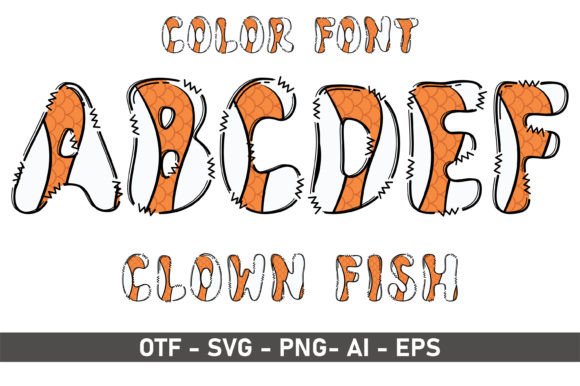
Clown Fish isn't just another display font—it's a typeface with genuine character. At first glance, you'll notice its rounded edges, slightly irregular baselines, and a hand-drawn quality that feels approachable without being sloppy. The letterforms carry a warmth that digital fonts often lack, reminiscent of lettering you'd find in a well-loved children's book or a hand-painted shop sign from a coastal town.
What makes Clown Fish stand out among premium fonts in the playful category is its restraint. Yes, it's whimsical, but it doesn't cross into cartoonish territory. The strokes maintain consistent weight, the spacing feels intentional, and the overall rhythm of the typeface stays readable even at smaller sizes. This balance between personality and function is surprisingly rare in creative fonts, and it's exactly what makes Clown Fish versatile enough for real-world applications beyond novelty projects.
The font carries a distinctly modern typography sensibility despite its playful roots. You won't find outdated clip-art energy here. Instead, it feels contemporary—like something a thoughtful designer would choose when the brief calls for warmth, approachability, and a touch of fun without sacrificing professionalism.
Where Clown Fish Actually Works
Let's get practical. As someone who's tested countless display fonts across different media, I can tell you that not every playful typeface survives contact with real design constraints. Clown Fish holds up in contexts where many similar fonts fall apart.
For children's books and educational materials, this font shines naturally. Its legibility at various sizes makes it suitable for chapter titles, pull quotes, and even body text in larger formats aimed at younger readers. The personality supports engagement without creating barriers to comprehension.
In brand identity and logo design, Clown Fish works well for businesses that want to signal approachability. Think boutique bakeries, children's clothing lines, independent toy shops, family-friendly restaurants, or creative agencies that don't take themselves too seriously. The font communicates "we're friendly and human" without saying "we're unprofessional."
Packaging design is another strong application. Products targeting parents, families, or anyone who appreciates a handmade aesthetic benefit from this typeface. It photographs well, maintains its character at different scales, and pairs effectively with both serif fonts and sans serif fonts for supporting text.
For social media graphics and digital content, Clown Fish brings personality to Instagram posts, Pinterest pins, YouTube thumbnails, and email headers. In a landscape where so much typography feels sterile and algorithmic, a font with genuine warmth can stop the scroll. Just remember that readability on screens requires testing at actual device sizes—what looks charming in your design software might become illegible on a phone screen.
Greeting cards, invitations, and stationery design represent perhaps the most natural home for this typeface. The handwritten quality feels authentic here, and the playful energy matches the emotional tone of celebrations, announcements, and personal correspondence.
Even in editorial design, Clown Fish can serve as an accent font for pull quotes, section headers, or feature titles in publications targeting lifestyle, parenting, food, or travel audiences. Used sparingly and paired with a clean sans serif for body text, it adds visual interest without overwhelming the page.
Working With the Font Files
Here's where practical details matter. The black version of Clown Fish works seamlessly with Cricut Design Space and other cutting machines, making it accessible for crafters and small business owners creating physical products. If you're making decals, t-shirts, signage, or handmade goods, this compatibility removes a significant friction point.
The color version of Clown Fish, however, requires specific software. It's compatible with programs like Photoshop, Illustrator, Silhouette Studio, and Inkscape, but the OTF and TTF files won't function in Cricut Design Space. This distinction matters if your workflow involves both digital design and physical production. Plan accordingly—use the color version for your digital graphics and the black version for cutting machine projects.
If you're unfamiliar with working with color fonts, the learning curve isn't steep, but it does exist. Understanding how to access alternate glyphs, manage color layers, and export correctly will save you frustration. The included documentation covers these basics, and investing thirty minutes in learning the mechanics pays dividends across future projects.
Making Smart Pairing Decisions
A display font like Clown Fish rarely works alone. The most effective designs use it strategically alongside complementary typefaces. For body text, pair it with a neutral sans serif—something like Open Sans, Lato, or Montserrat provides clean contrast without competing for attention. If your project leans more editorial or sophisticated, a classic serif font like Georgia or Playfair Display can ground the playfulness with authority.
Avoid pairing Clown Fish with other decorative or handwritten fonts. Two competing personalities create visual noise rather than hierarchy. The goal is contrast—one font leads, the other supports. Let Clown Fish be the voice that draws the eye, and give it a quiet partner that handles the heavy lifting of longer text passages.
Test your pairings at actual size, in context. A font combination that looks balanced in a 400-pixel preview might feel cramped or disconnected in a printed brochure or on a live website. Print test pages. View designs on multiple screens. Ask someone unfamiliar with the project to read a paragraph and tell you if anything feels difficult or awkward.
Evaluating Fit for Your Brand
Not every project benefits from a playful creative font, and recognizing when not to use something is just as valuable as knowing when to deploy it. Clown Fish serves brands and projects that want to feel human, approachable, and energetic. If your audience expects clinical precision, corporate authority, or minimalist restraint, this typeface will send mixed signals.
Consider your competitive landscape. If every business in your category uses clean sans serif typography, Clown Fish could differentiate you meaningfully. If your competitors already lean into playful aesthetics, you might need to find a different angle rather than blending into the same visual language.
Think about longevity, too. Trend-driven fonts can date your materials quickly. Clown Fish avoids the most obvious trend markers, but its personality is distinctive enough that overuse in your materials could feel monotonous. Use it as an accent within a broader typographic system rather than applying it to every headline, subhead, and call-to-action across your entire brand.
The commercial licensing terms matter for any business application. Confirm that your intended use—whether that's client work, product sales, digital downloads, or merchandise—falls within the license you're purchasing. Licensing details vary between foundries, and assumptions here can create expensive problems later.
Final Thoughts on Using Clown Fish Effectively
The best typography decisions start with understanding your audience and your message, then selecting tools that support both. Clown Fish is a well-crafted typeface that fills a genuine need in the design asset landscape. It brings personality without sacrificing function, and its file compatibility across popular design and crafting platforms makes it practically useful beyond the screen.
Treat it as one tool in your typographic toolkit rather than a default choice for everything. Test it, pair it thoughtfully, respect its strengths, and it'll serve you well across projects ranging from brand identity work to packaging design to the greeting cards you're cutting on your Cricut at midnight. Good design isn't about having the most fonts—it's about knowing exactly when and why each one earns its place.