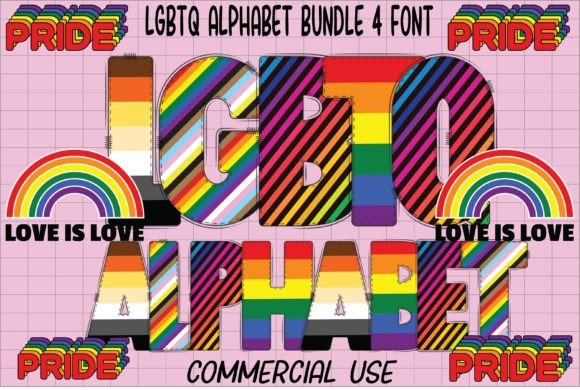
LGBTQ Alphabet: A Typeface for Pride and Expression
The LGBTQ Alphabet is more than just a collection of letters; it's a visual statement. As a creative professional, I see it as a powerful design asset that moves beyond basic communication to embody celebration, identity, and community. This typeface is built with intention, often featuring bold, expressive letterforms that break away from conventional, rigid structures. You might notice fluid curves, sharp, confident angles, or a playful bounce in its baseline, all designed to convey a sense of movement and openness. The personality of the LGBTQ Alphabet is inherently vibrant and inclusive, making it a standout choice for projects that aim to connect on a deeper, more emotional level.
Where This Creative Font Truly Shines
Understanding where to deploy the LGBTQ Alphabet is key to leveraging its full potential. Its character makes it exceptionally suited for projects where impact and recognition are paramount. Think of it as a premium font for headlines, logos, and hero graphics rather than for body text. In brand identity, it can instantly signal a company's values of inclusivity and support, making it ideal for LGBTQ+-owned businesses, community organizations, or brands with strong allyship campaigns. For event marketing, it's a natural fit for Pride parade banners, festival posters, and promotional materials that need to radiate energy and joy.
Beyond events, consider its application in editorial design and social media graphics. A magazine feature on queer culture or a social media campaign for a related cause would benefit from its distinctive flair. In packaging design, especially for niche products targeting this community, the font can add a layer of authenticity and celebration. However, its bold nature means it's a display font at heart. Using it for long paragraphs in web design or print documents would likely compromise readability. Its strength lies in short, powerful bursts of text where its personality can be fully appreciated without overwhelming the viewer.
Integrating the Font with Purpose and Professionalism
Choosing to use the LGBTQ Alphabet is a deliberate design choice, and integrating it effectively requires some strategy. First, always consider your project's core message. Does it align with the font's themes of pride, diversity, and celebration? If your goal is a subtle, corporate tone, this might not be the right typeface. For projects where it is a fit, think about font pairing. Because it's so expressive, it pairs best with clean, neutral sans serif fonts or classic serif fonts for supporting text. This creates a clear visual hierarchy, allowing the LGBTQ Alphabet to command attention in headlines while the body copy remains easy to read.
Practical testing is non-negotiable. Always view the font in context—on a mockup of your poster, website header, or logo. Check the readability at the intended size, especially for any all-caps configurations. If the font family includes multiple weights or styles (like a bold or italic), explore how these can add nuance to your design. Finally, if you're using it for a client or commercial project, verify the commercial font license. Ensure it covers your intended use, whether for digital ads, printed merchandise, or software embedding. By approaching the LGBTQ Alphabet with this level of care, you ensure it enhances your project's professionalism and resonance, transforming a simple design into a meaningful piece of communication that truly connects with its audience.